Libertad de información.
2025.
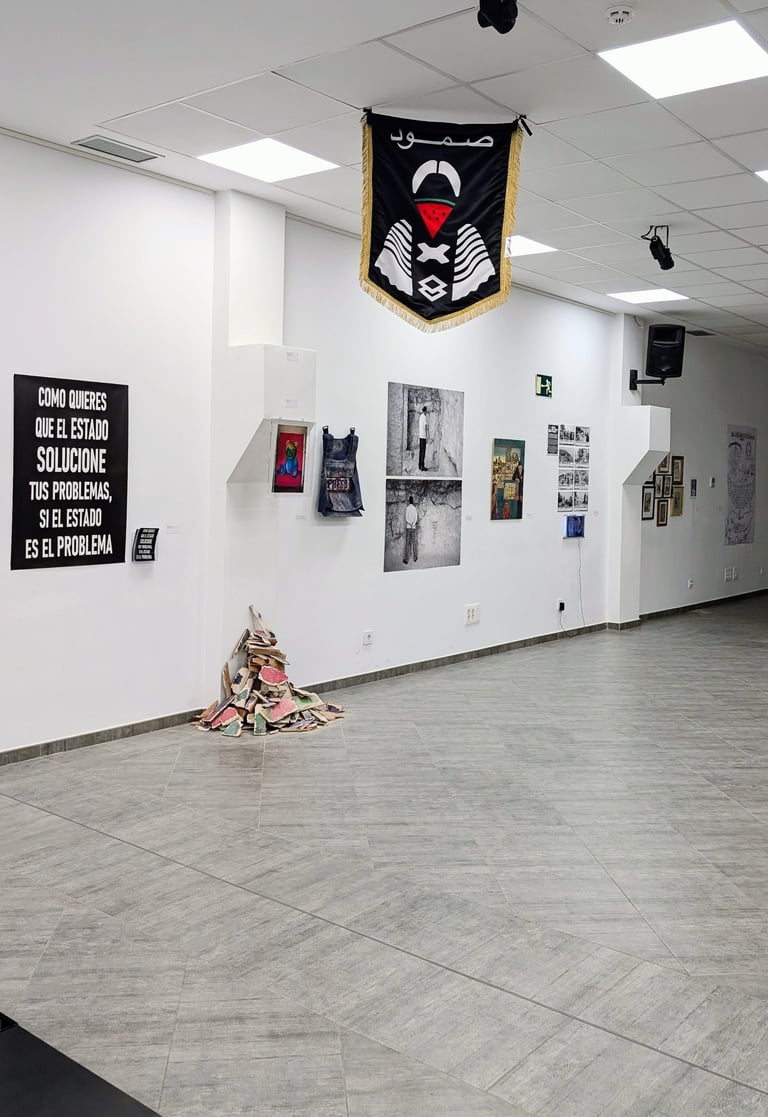
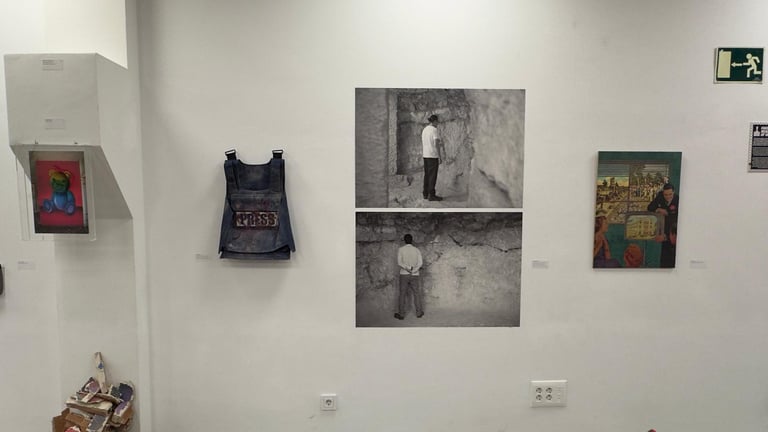
Obra presentada para la exposición Genocidio, en la Fundación Anselmo Lorenzo.
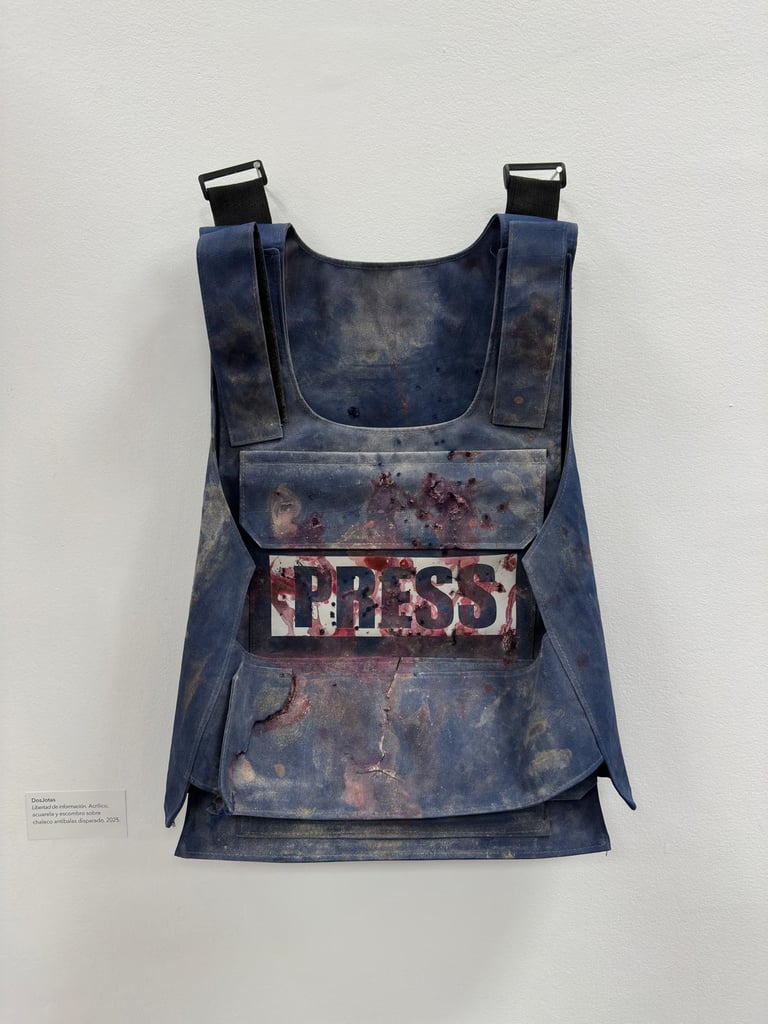
Libertad de información
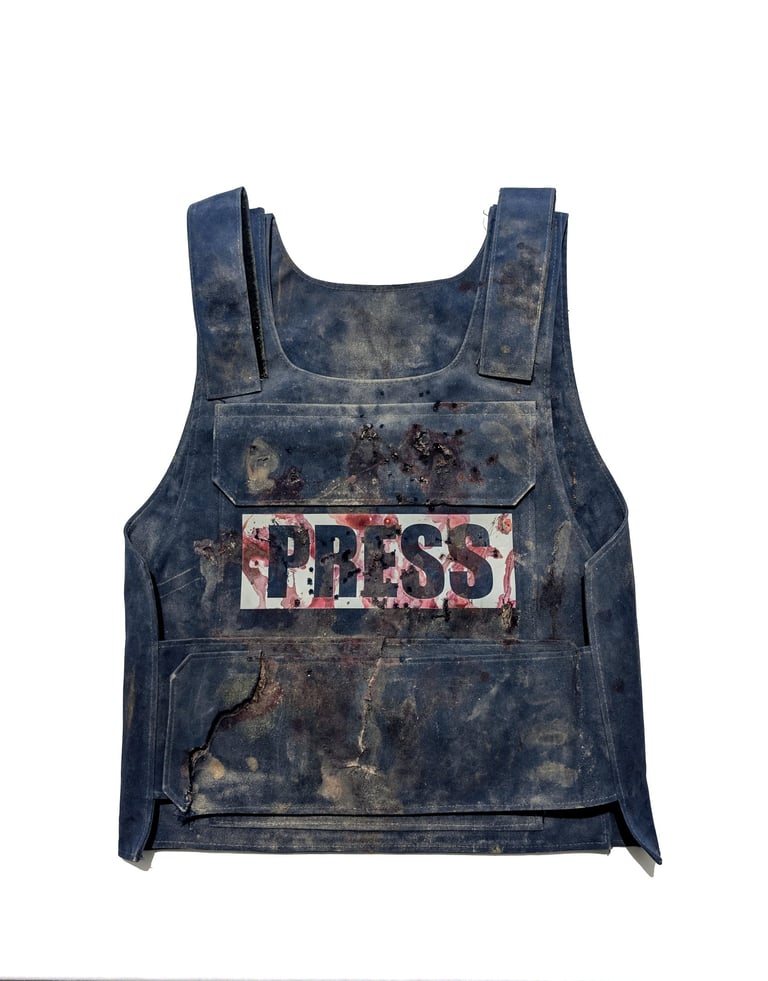
Acrílico, acuarela y escombro sobre chaleco antibalas disparado.
En dos años de guerra en Gaza han sido asesinados más de 240 periodistas, más que en las guerras de Vietnam, Corea, Afganistán y los Balcanes juntas. Esta cifra no sólo describe la magnitud de los ataques, sino la estrategia explícita de impedir que el conflicto sea narrado. En un contexto marcado por el bloqueo de Israel a la entrada de periodistas extranjeros, la mayoría de los reporteros muertos son palestinos, “Terroristas” para Israel, periodistas asesinados por ataques israelíes según la ONU, Amnistía Internacional o Human Rights Watch.
La obra plantea un dualismo, por un lado, el chaleco antibalas disparado porta una huella física de violencia que no puede reducirse a metáfora. Ese impacto convierte al chaleco en un testigo material de la agresión dirigida no sólo contra quienes informan, sino contra la posibilidad misma de que exista un relato. Por otro lado, la intervención pictórica no intenta imitar la sangre ni reproducir el horror, sino que introduce una distancia necesaria, evitando la espectacularización y señalando que lo que vemos es siempre una construcción. Frente a los impactos reales, la pintura revela la otra dimensión del conflicto: la disputa por la imagen, por lo que puede mostrarse y lo que se intenta ocultar.
Freedom of Information. 2025
Artwork submitted for the Genocide exhibition at Anselmo Lorenzo Foundation.
Acrylic, watercolor, and rubble on a shot-out bulletproof vest.
In two years of war in Gaza, more than 240 journalists have been killed—more than in the wars in Vietnam, Korea, Afghanistan, and the Balkans combined. This figure not only describes the magnitude of the attacks but also the explicit strategy of preventing the conflict from being reported. In a context marked by Israel's blockade of foreign journalists, the majority of the reporters killed are Palestinians, "terrorists" according to Israel, journalists killed by Israeli attacks according to the UN, Amnesty International, and Human Rights Watch.
The artwork presents a duality: on the one hand, the shot-out bulletproof vest bears a physical mark of violence that cannot be reduced to a metaphor. This impact transforms the vest into a material witness to the aggression directed not only against those who report the news but against the very possibility of a narrative. On the other hand, the pictorial intervention does not attempt to imitate blood or reproduce horror, but rather introduces a necessary distance, avoiding sensationalism and indicating that what we see is always a construct. In contrast to the real-life impacts, the painting reveals another dimension of the conflict: the struggle over the image, over what can be shown and what is concealed.